Quick facts
What to know before you go
Mount Fanjingshan — The Cloud Mountain Where Biodiversity And Pilgrimage Share The Same Staircase is a curated China Hidden Gems destination in Guizhou, selected for travelers who want the place, timing, effort, and logistics in one scan.
- Administrative location
- Tongren, Guizhou
- Chinese name
- 梵净山 · Fanjingshan
- Best season
- April to October
- Difficulty
- Moderate
- Time needed
- Full day
- Typical cost
- $$
- Getting there
- Reach Fanjingshan with a summit plan already chosen so weather, cableway use, and stair tolerance all support the same route.
Editorial briefing
Why this place works
A practical guide to Mount Fanjingshan for travelers deciding how much the summit, stairs, and weather should shape the day, with honest notes on cableway use, Red Clouds Golden Summit, and why the mountain works best when nature and sacred ascent stay in the same frame.
Why go
- A practical guide to Mount Fanjingshan for travelers deciding how much the summit, stairs, and weather should shape the day, with honest notes on cableway use, Red Clouds Golden Summit, and why the mountain works best when nature and sacred ascent stay in the same frame.
- Mount Fanjingshan — The Cloud Mountain Where Biodiversity And Pilgrimage Share The Same Staircase gives travelers a concrete reason to plan around Tongren, guizhou, not just a generic first-trip city list.
- It is strongest for mountains, unesco, nature, with enough practical context to compare timing, difficulty, and onward route fit.
Turn this into a trip
Save Mount Fanjingshan — The Cloud Mountain Where Biodiversity And Pilgrimage Share The Same Staircase, then plan around it.
Keep this gem on your device, open it in your bucket list, or start a planner draft with the destination already filled in.
Professional route review
Already combining Mount Fanjingshan — The Cloud Mountain Where Biodiversity And Pilgrimage Share The Same Staircase with other stops?
A Route Reality Check reviews pace, obvious cross-city handoffs, and preparation risks in the route you already built.
No booking, visa service, supplier packaging, funds handling, guarantee, or on-trip support.
Application-based Beta
$29
48-72 hours after acceptance, payment confirmation, and receipt of the complete route.
Review the application boundaryTrip planning intake
Ask whether Mount Fanjingshan — The Cloud Mountain Where Biodiversity And Pilgrimage Share The Same Staircase fits your route.
This is a lightweight planning signal, not an instant concierge. Leave your trip context and a real question, and the team can reply manually after review.
Story visuals
Mount Fanjingshan — The Cloud Mountain Where Biodiversity And Pilgrimage Share The Same Staircase
The Guizhou Mountain That Needs More Than One Famous Pinnacle
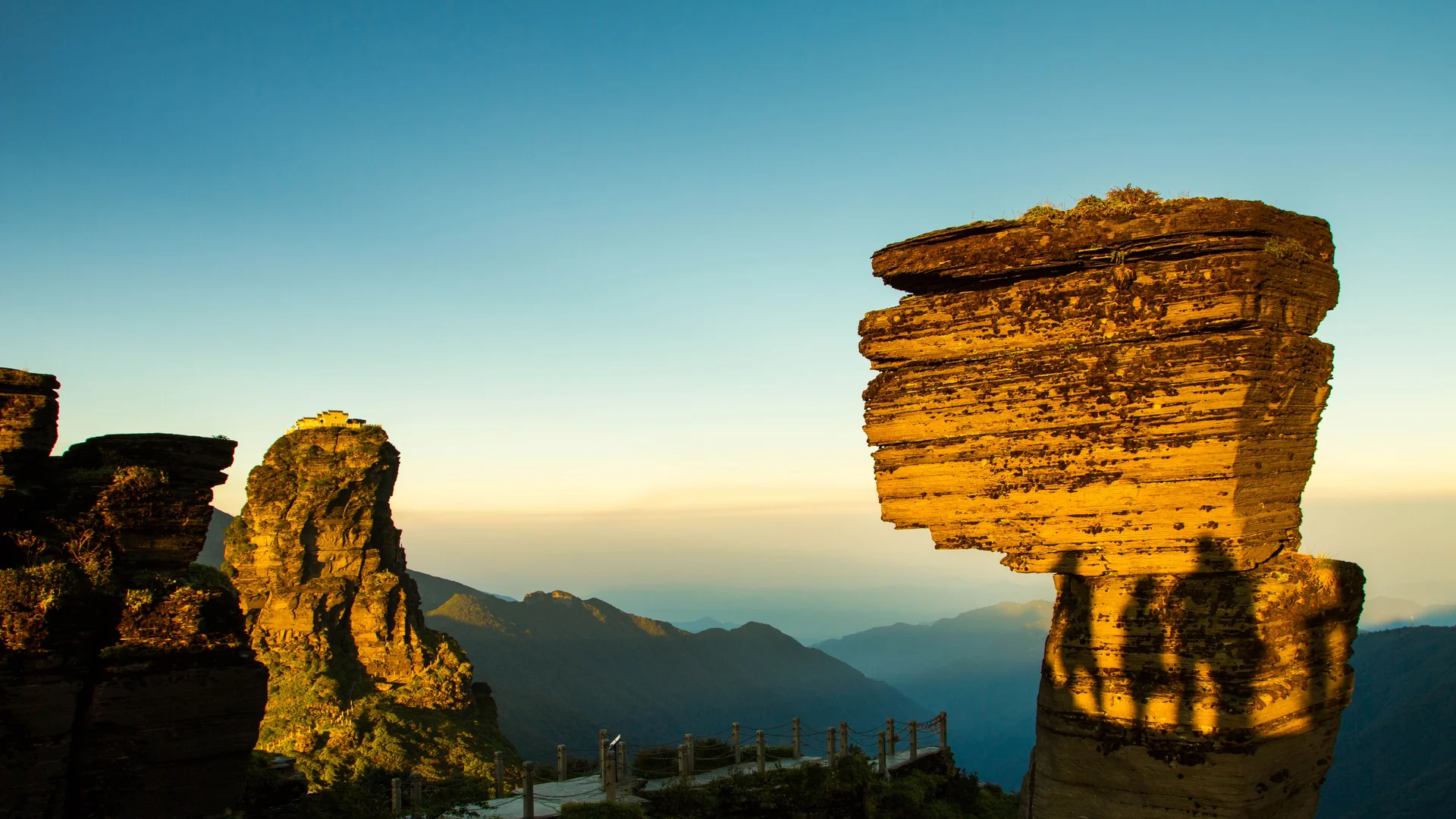
Fanjingshan is easy to reduce to a single image. A dramatic summit, temples perched on a split rock, clouds curling around a mountain that looks almost too theatrical to be real. That image is powerful, but it can narrow the destination too fast. Fanjingshan is not only one improbable summit photo. It is a mountain where biodiversity, sacred ascent, cloud conditions, and route design still depend on one another.
That is why a good page should not treat the place like a miracle-image machine. The better framing is that Fanjingshan is a mountain heritage site where the journey to the summit, the weather that may or may not open it, and the ecological atmosphere below all belong to the same experience. The more the traveler understands that, the more the page becomes useful instead of simply seductive.
Why It Works
The first reason Fanjingshan works is summit identity. Few mountains in China have such a strong visual emblem. The Red Clouds Golden Summit is immediately legible, and that gives the page a high-recognition anchor. But the destination stays interesting because the summit is supported by the rest of the mountain rather than floating as an isolated oddity.
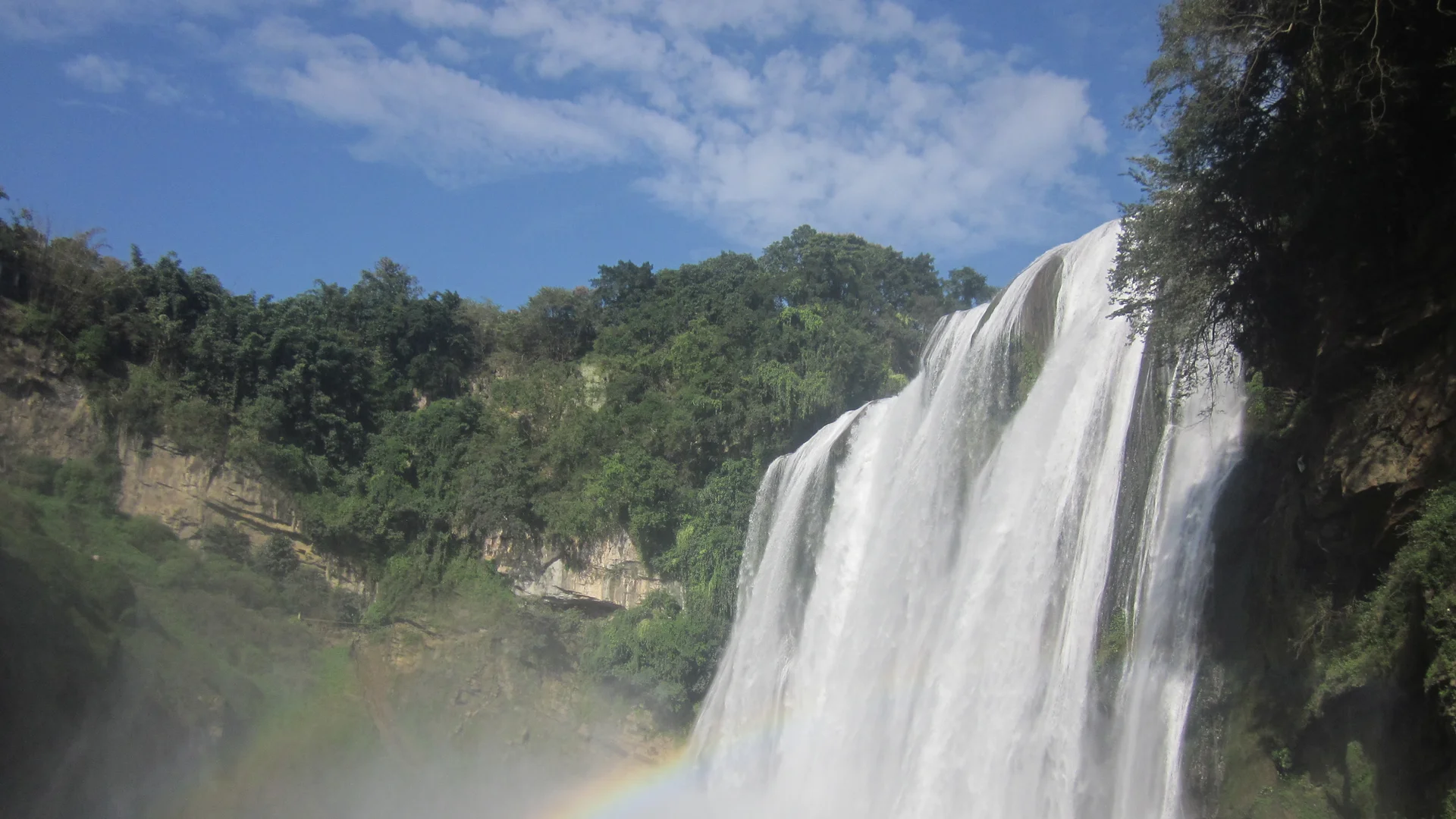
The second reason is that Fanjingshan broadens Guizhou beyond waterfall-first thinking. Huangguoshu gives the province one kind of dramatic natural icon. Fanjingshan offers another: mountain cloud, sacred stair, biodiversity, and a vertical route that feels spiritually and physically different. That contrast strengthens the overall destination mix.
The third reason is that planning matters. Cableway use, summit timing, weather windows, and the user's appetite for stairs all change the day. A traveler who makes those choices consciously can have a route that feels focused and coherent. A traveler who arrives hoping only for the one most famous photograph may still get lucky, but they are more exposed to disappointment than they need to be.
How To Plan The Route
The first decision is whether the day is summit-first or mountain-first. For many first-time visitors, summit-first is still the right answer because Fanjingshan's visual identity is too strong to ignore. But the page should not let that collapse into tunnel vision. The summit matters most when the traveler also understands the mountain's longer stair logic and changing ecological mood.
The second decision is how much assistance to take. Cableways and access choices do not make the route less valid. They simply change what kind of mountain the user is choosing to experience. A traveler who wants summit drama with less physical cost should be told that honestly. A traveler who wants more of the mountain underfoot should also know what that means in time and fatigue.
Weather is the third decision and perhaps the most humbling one. Cloud and mist can make Fanjingshan feel transcendent, but they can also erase the exact summit clarity that many people come for. That is not a defect. It is part of the mountain's real character. The page should say this plainly so that the traveler arrives with expectation aligned to reality.
What To Prioritize
Prioritize one coherent summit attempt supported by mountain context. That means the page should let the Red Clouds Golden Summit remain the emotional center while still giving room to the stairs, ridges, and ecological atmosphere that make the summit more than an isolated viewing platform.
The page should also protect against overcompression. Fanjingshan gets weaker when the user treats every minute not spent at the top as a delay. The mountain's build-up matters. Part of the destination's power comes from the feeling that the summit belongs to a larger mountain rather than to a single camera position.
It is also worth being direct about sacredness. The temples and ascent tradition matter, but the page does not need to overperform spirituality. It is enough to show that pilgrimage logic and natural form still coexist here. That balance is one of the reasons the page feels stronger than pure geology or pure religion alone.
Who Should Save It
Save Fanjingshan if you want one Guizhou mountain page that feels biologically distinct, visually iconic, and route-dependent. It is strongest for mountain travelers, photographers who care about clouds and summit drama, and visitors who want an ascent with more character than a generic scenic-spot climb.
It is weaker for travelers who need total summit certainty or who dislike weather dependence. Fanjingshan's best promise is not control. It is atmosphere with structure.
What To Confirm Before You Go
Before finalizing the route, confirm summit access conditions, how much of the day you want to spend climbing versus riding, and whether the weather window supports the version of the mountain you most want. Also decide how much you are willing to let the mountain remain itself. Fanjingshan rewards that attitude more than rigid expectation.
The honest promise is simple: Mount Fanjingshan is worth the trip when the traveler lets summit drama, cloud mood, and sacred ascent stay in the same frame.
How To Use This Page In The Tools
Fanjingshan should hand off to the planner as a summit-and-weather question, not as a generic Guizhou mountain. The useful prompt is "plan Fanjingshan around a coherent summit attempt, realistic cableway and stair choices, and weather uncertainty that still leaves the day worthwhile if the clouds take over." That gives the planning tools a structure that matches the mountain's real logic.
Traveler actions
Save, check in, share, and help other travelers judge whether this place is worth the trip.
Traveler Comments
Share your Mount Fanjingshan — The Cloud Mountain Where Biodiversity And Pilgrimage Share The Same Staircase experience
Continue exploring